


Somewhere in the research there’s a moment where you realize these three products are not three versions of the same thing. Comparing rybelsus vs wegovy vs Mounjaro means comparing two different molecules, two different delivery routes, and three different Health Canada authorizations. Getting that straight first makes everything else easier.
Key takeaways
- Rybelsus and Wegovy both contain semaglutide. Mounjaro contains tirzepatide, a different molecule.
- Rybelsus is a daily tablet. Wegovy and Mounjaro are once-weekly injections.
- In Canada, Health Canada has authorized Wegovy for chronic weight management. Rybelsus and Mounjaro are authorized for type 2 diabetes.
- In the only head-to-head trial of the two injectable molecules, average weight reduction was 20.2% with tirzepatide and 13.7% with semaglutide over 72 weeks.
- Oral semaglutide at the doses available in Canada produces much smaller weight change than the injectable doses studied for weight management.
 The two molecules, and why the distinction matters
Both semaglutide and tirzepatide belong to the incretin class. Incretins are gut hormones released when you eat. They signal the pancreas, slow how quickly the stomach empties, and act on appetite centres in the brain.
Semaglutide is a GLP-1 receptor agonist. It mimics one incretin hormone, glucagon-like peptide-1.
Tirzepatide is a dual agonist. It acts on the GLP-1 receptor and also on the receptor for glucose-dependent insulinotropic polypeptide, a second incretin hormone. The working theory is that hitting both pathways produces a larger metabolic effect than hitting one. The comparative trial data is consistent with that.
This is the single most useful thing to understand before comparing products. Rybelsus and Wegovy are the same active ingredient delivered differently, a point covered further in our comparison of oral and injectable semaglutide. Mounjaro is a different drug entirely.
What each product is authorized for in Canada
Health Canada authorizes a product for a specific use, based on the evidence the manufacturer submitted for that use. Authorization is not a statement about what a molecule can do. It is a statement about what was reviewed.
| Product | Active ingredient | Format | Health Canada authorized use |
|---|---|---|---|
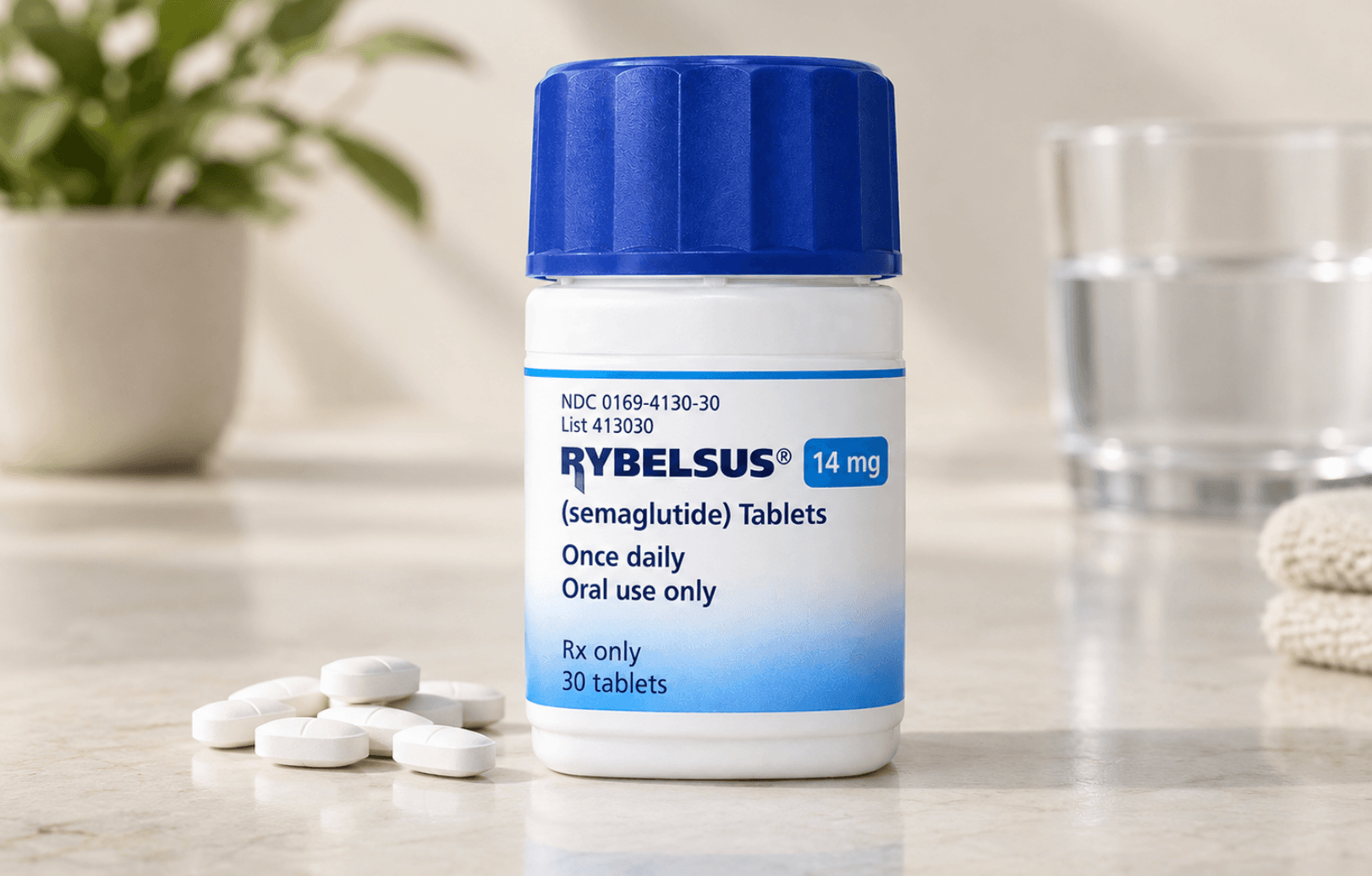
| Rybelsus | Semaglutide | Daily oral tablet, up to 14 mg | Type 2 diabetes |
| Wegovy | Semaglutide | Weekly injection, up to 2.4 mg | Chronic weight management, plus cardiovascular risk reduction in eligible adults |
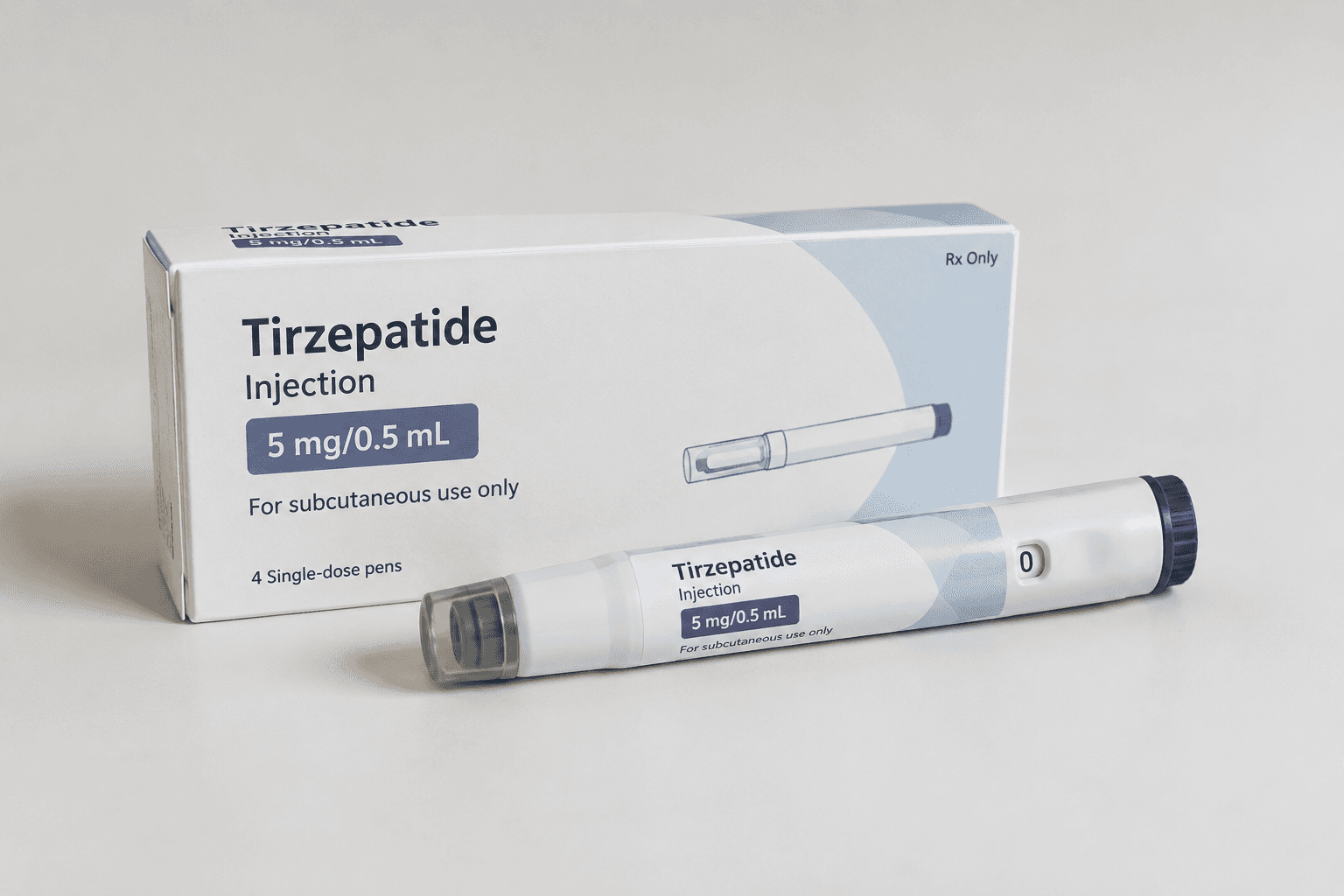
| Mounjaro | Tirzepatide | Weekly injection, up to 15 mg | Type 2 diabetes |
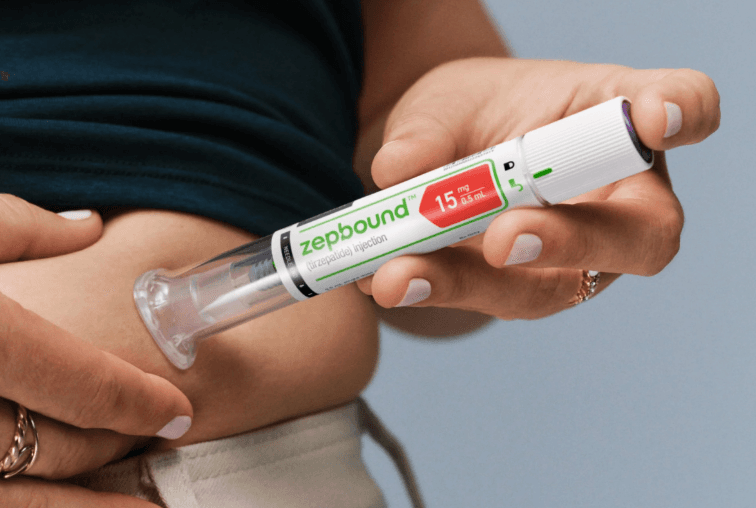
| Zepbound | Tirzepatide | Weekly injection, up to 15 mg | Chronic weight management, and moderate to severe obstructive sleep apnea in adults with obesity |
For how these sit alongside every other option authorized here, see our complete guide to weight management options in Canada. That table also answers a question people ask constantly in a roundabout way. Rybelsus vs Zepbound is not really a comparison of two weight management options in Canada. That is because only one of them has been authorized here for that purpose.
For chronic weight management, Health Canada’s authorized criteria for the products carrying that indication are an initial body mass index of 30 kg/m² or higher, or 27 kg/m² or higher with at least one weight-related health condition, used alongside a reduced-calorie diet and increased physical activity.
A prescriber can legally prescribe an authorized medication outside its authorized use where they judge it clinically appropriate. That is called off-label prescribing and it is common. It does mean the product was not reviewed by Health Canada for that use. That insurance coverage is usually harder to obtain.
Rybelsus vs Wegovy: same molecule, very different exposure
Here is the part that surprises people. Rybelsus is dosed up to 14 mg daily. Wegovy is dosed up to 2.4 mg weekly. The tablet number is larger, so the tablet must deliver more semaglutide. It does not.
Semaglutide is a peptide, and peptides are poorly absorbed from the gut. The oral tablet includes an absorption enhancer, and even with it, only a small fraction of each dose reaches the bloodstream. The larger number compensates for the loss, and it does not fully close the gap.
Absorption is also fragile. The tablet has to be taken on an empty stomach, first thing, with no more than about 120 mL of water, and nothing else to eat, drink, or swallow for at least 30 minutes afterward. Deviating from that reduces how much gets in.
The effect data reflects this. In the PIONEER program, oral semaglutide 14 mg in adults with type 2 diabetes produced a weight reduction of roughly 2.3 kg more than placebo at 26 weeks in the monotherapy trial, and around 3.8 kg absolute in the metformin-background trial. The STEP 1 trial of injectable semaglutide 2.4 mg in adults with overweight or obesity found a mean body weight reduction of 14.9% over 68 weeks.
Those numbers are not directly similar. Different populations, different durations, different endpoints. People with type 2 diabetes consistently lose less weight on incretin therapy than people without it. This accounts for part of the gap. But the direction is not ambiguous, and no reading of the data makes 14 mg oral equivalent to 2.4 mg injected.
Internationally, a 25 mg oral dose has been studied specifically for weight management, and in a 71-week trial it produced a 13.6% mean weight reduction against 2.2% for placebo. The United States approved oral semaglutide for chronic weight management at that dose in 2026. That dose is under review by Health Canada and is not now achievable here with the available tablet strengths.
Rybelsus vs Mounjaro, and the head-to-head data
Which is better, Rybelsus or Mounjaro is the wrong shape of question. That is because no trial has compared them directly and they are authorized here for the same condition rather than for different ones.
What does exist is a direct comparison of the two injectable molecules. SURMOUNT-5, published in the New England Journal of Medicine in 2025, randomized 751 adults with obesity, or overweight with a weight-related condition, and without diabetes, to tirzepatide or semaglutide for 72 weeks. Each was titrated to the highest tolerated maintenance dose.
| Outcome at 72 weeks | Tirzepatide | Semaglutide |
|---|---|---|
| Mean body weight change | −20.2% | −13.7% |
| Mean waist circumference change | −18.4 cm | −13.0 cm |
| Lost at least 25% of body weight | 31.6% | 16.1% |
Worth noting about the design: the trial was open-label, meaning people knew which drug they were taking. It also enrolled a higher proportion of men than most obesity trials, and weight loss was roughly 6 percentage points lower in men than women in both arms.
Gastrointestinal side effects were the most common adverse events in both groups, at much the same frequency.
Side effects across all three
The tolerability profile is similar across the class, because the mechanism is shared.
Common effects include nausea, vomiting, diarrhea, constipation, abdominal pain, and fatigue. In the trials supporting Wegovy’s authorization, gastrointestinal effects occurred in about 73% of people receiving semaglutide. Most are worst during dose escalation and ease as the body adjusts.
Serious risks that apply across the class include pancreatitis, gallbladder disease including gallstones, kidney injury usually linked to dehydration from vomiting or diarrhea, and diabetic retinopathy problems in people with existing eye disease. These products carry a boxed warning regarding thyroid C-cell tumours seen in rodent studies, and are contraindicated in people with a personal or family history of medullary thyroid carcinoma or multiple endocrine neoplasia syndrome type 2.
Oral semaglutide has one thing the injectables do not. Because it must be taken alone on an empty stomach, it interacts with the timing of other oral medicines. If you take a daily morning medication, that needs to be worked out with a prescriber rather than guessed at.
 Safety and who should speak to a healthcare provider first
Speak with a licensed healthcare provider before starting any medication in this class if you:
- Have a personal or family history of medullary thyroid carcinoma, or multiple endocrine neoplasia syndrome type 2
- Have had pancreatitis
- Have gallbladder disease or a history of gallstones
- Have type 1 diabetes, or take insulin or a sulfonylurea
- Have diabetic retinopathy
- Have a history of an eating disorder
- Are pregnant, planning to become pregnant, or breastfeeding
- Take other oral medicines on a fixed daily schedule
- Have reduced kidney function
Stop and seek urgent care for severe, persistent abdominal pain that may radiate to the back, especially with vomiting.
Frequently asked questions
Is Rybelsus the same as Wegovy?
They contain the same active ingredient, semaglutide, but they are not the same product. Rybelsus is a daily tablet authorized in Canada for type 2 diabetes. Wegovy is a weekly injection authorized for chronic weight management. The doses and the amount of drug that reaches the bloodstream differ much.
Is Mounjaro better than Rybelsus?
No trial has compared them directly. In the head-to-head comparison of the two injectable molecules, tirzepatide produced greater average weight reduction than semaglutide over 72 weeks. That result does not transfer automatically to a tablet at a different dose in a different population.
Why is Rybelsus 14 mg but Wegovy only 2.4 mg?
Semaglutide is a peptide, and peptides absorb poorly when swallowed. Only a small fraction of an oral dose reaches the bloodstream. So the tablet dose is much larger to partly make up for that loss. An injection bypasses the gut entirely, so a smaller amount delivers more drug to the body.
Can you switch between them?
Switching between incretin medicines does happen in clinical practice. The dose equivalences are not intuitive, though, and restarting titration from a low dose is usually needed to manage gastrointestinal side effects. This is a prescriber decision that depends on why you are switching, not something to self-manage or work out from a conversion chart online.
What about compounded semaglutide?
Compounded preparations are made up by a pharmacy rather than manufactured and reviewed as a finished product. They were not what the clinical trials studied. So the effect figures quoted here do not transfer to them automatically. Ask your prescriber directly what you are being given and where it comes from.
The bottom line
Rybelsus, Wegovy, and Mounjaro differ by molecule, by route, by dose, and by what Health Canada reviewed them for. The comparison that actually matters to your situation depends on which condition is being treated and what your clinician judges appropriate, not on which name comes up most often online.
To see how the two tirzepatide products differ, read the two tirzepatide authorizations explained. To work out what fits your situation, start an online assessment with a licensed Canadian prescriber.
References
- Aronne LJ, Horn DB, le Roux CW, et al. Tirzepatide as compared with semaglutide for the treatment of obesity (SURMOUNT-5). New England Journal of Medicine, 2025. https://www.nejm.org/doi/full/10.1056/NEJMoa2416394
- Health Canada. Regulatory Decision Summary for Wegovy. Drug and Health Products Portal. https://dhpp.hpfb-dgpsa.ca/review-documents/resource/RDS00896
- Aroda VR, Rosenstock J, Terauchi Y, et al. PIONEER 1: randomized clinical trial of the efficacy and safety of oral semaglutide monotherapy in comparison with placebo in patients with type 2 diabetes. Diabetes Care, 2019. https://diabetesjournals.org/care/article/42/9/1724/36289/PIONEER-1-Randomized-Clinical-Trial-of-the
Disclaimer: This article is intended for informational purposes only and is not a substitute for professional medical advice, diagnosis, or treatment. Always consult your healthcare provider with any questions about a medical condition or treatment.
Editorial Standards: At Rocky Health, we’ve made it our mission to support men and women with trustworthy, easy-to-understand medical and health information online. Read more about our editorial standards here.